
Looking for other federal and provincial benefit programs? Visit our Canada Benefits and Payment Dates Guide to compare major government benefits, payment schedules, and eligibility in one place.
With the rising cost of groceries, housing, utilities, and other everyday expenses, many Canadian households are looking for ways to manage their budgets.
One federal program that provides financial assistance to eligible Canadians is the Canada Groceries and Essentials Benefit (CGEB).
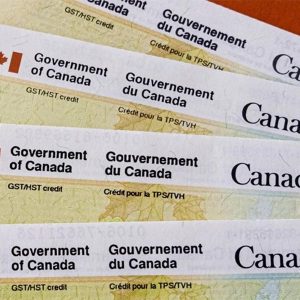
The program was previously known as the Goods and Services Tax/Harmonized Sales Tax (GST/HST) credit. In July 2026, it was renamed the Canada Groceries and Essentials Benefit, with regular payment amounts increased by 25% for five years.
The benefit continues to support eligible low- and modest-income individuals and families through quarterly payments administered by the Canada Revenue Agency (CRA).
In this guide, we’ll explain what the CGEB is, who qualifies, how much you can receive, when payments are made, how to apply, and what the proposed 2027 supplement could mean for Canadian households.
What Is the Canada Groceries and Essentials Benefit (CGEB)?
The Canada Groceries and Essentials Benefit is a federal tax-free payment administered by the Canada Revenue Agency.
It helps eligible individuals and families offset some of the GST and HST they pay on everyday purchases.
The program was previously called the Goods and Services Tax/Harmonized Sales Tax (GST/HST) credit. It was renamed in July 2026, while keeping the same general eligibility requirements, payment calculation, and quarterly structure.
The benefit is intended to provide financial support to Canadians with low or modest incomes. Although its new name highlights groceries and essentials, recipients are not required to spend the money exclusively on food.
What Does the Canada Groceries and Essentials Benefit Help Cover?
The benefit provides flexible financial assistance that households can use toward everyday expenses, including:
- Groceries and Food: Help with the cost of food and household grocery purchases.
- Housing Expenses: Assistance with rent, mortgage payments, and other housing costs.
- Utilities: Support for electricity, heating, water, and other household bills.
- Transportation: Help with commuting and everyday transportation expenses.
- Essential Household Purchases: Money that can be used for other necessary expenses based on individual needs.
The CGEB is not a restricted grocery voucher. It is a cash benefit, so eligible recipients can decide how to use the money.
Key Facts About the CGEB
| Feature | Details |
| Official Name | Canada Groceries and Essentials Benefit |
| Former Name | GST/HST credit |
| Administrator | Canada Revenue Agency |
| Payment Type | Tax-free federal benefit |
| Payment Frequency | Quarterly |
| First CGEB Payment | July 3, 2026 |
| Regular Payment Months | January, April, July, October |
| Regular Payment Increase | 25% starting July 2026 |
| Duration of Increase | Five years, 2026–2031 |
| Eligibility | Based on residency, age, family circumstances, and income |
| Application | Generally automatic after filing taxes |
| Taxable Income | No |
How Is the CGEB Different from the Former GST/HST Credit?
The Canada Groceries and Essentials Benefit builds on the former GST/HST credit.
The program retained its general structure and eligibility rules, but regular benefit amounts increased by 25% starting in July 2026.
CGEB vs. GST/HST Credit
| Feature | Former GST/HST Credit | CGEB |
| Program Name | GST/HST credit | Canada Groceries and Essentials Benefit |
| Payment Frequency | Quarterly | Quarterly |
| Eligibility | Income-based | Same general eligibility system |
| Tax Treatment | Tax-free | Tax-free |
| Application | Generally automatic through tax filing | Generally automatic through tax filing |
| Regular Payment Increase | Previous payment structure | 25% increase starting July 2026 |
| Duration of Increase | Not applicable | Five years, 2026–2031 |
| One-Time 2026 Top-Up | Not applicable | Issued June 5, 2026 |
| Proposed 2027 Supplement | Not applicable | Announced in Budget 2026 |
What Remains the Same?
Several important features of the former GST/HST credit continue under the new name:
- Eligibility remains based on Canadian tax residency, age, family circumstances, and adjusted family net income.
- The CRA continues to calculate payments using tax return information.
- Payments are generally issued four times per year.
- Most eligible Canadians do not need to submit a separate application.
- The benefit remains non-taxable.
- Related provincial and territorial benefit programs may continue to be assessed through the same tax filing process.
What Has Changed?
The most important change is the 25% increase in regular benefit amounts beginning in July 2026.
The government also introduced a one-time GST/HST credit top-up in June 2026 before the new CGEB payment structure began.
Budget 2026 subsequently proposed another separate one-time supplement for early 2027. These additional payments should not be confused with the regular quarterly benefit.
Newcomers to Canada: Can You Qualify?
Yes—new residents may be eligible. However, you may need to:
- Submit a special CRA form (if you haven’t filed taxes yet)
- Provide residency and income information
Once registered, you can begin receiving payments.

The June 2026 One-Time Payment
Before the Canada Groceries and Essentials Benefit officially replaced the GST/HST credit in July 2026, eligible Canadians received a one-time top-up payment on June 5, 2026.
The payment was intended to provide immediate financial assistance before the higher regular CGEB payments began.
How Much Was the June 2026 Top-Up?
The one-time top-up generally represented 50% of the annual GST/HST credit amount for the July 2025 to June 2026 benefit year.
The amount depended on family circumstances in January 2026 and adjusted family net income from the 2024 tax return.
The maximum top-up amounts were:
Single Individuals and Single-Parent Families
| Family Situation | Maximum One-Time Payment |
| Single individual without children | $267 |
| Single parent with 1 child | $441 |
| Single parent with 2 children | $533 |
| Single parent with 3 children | $625 |
| Single parent with 4 or more children | $717 |
Married or Common-Law Couples
| Family Situation | Maximum One-Time Payment |
| Couple without children | $349 |
| Couple with 1 child | $441 |
| Couple with 2 children | $533 |
| Couple with 3 children | $625 |
| Couple with 4 or more children | $717 |
These were maximum amounts. Actual payments depended on eligibility and adjusted family net income.
Who Received the June 5 Top-Up?
You generally qualified if:
- You filed your 2024 income tax return.
- You were entitled to receive the GST/HST credit in January 2026.
- You met the applicable residency and eligibility requirements.
Only one payment was generally issued for a couple or family.
If you did not receive the payment, possible reasons included not filing your 2024 tax return, not being eligible in January 2026, your spouse receiving the payment on behalf of the household, or the payment being applied to an outstanding debt.
Important: The June 5, 2026 top-up has already been issued. It is a historical payment and should not be confused with the proposed 2027 supplement.
Higher Regular Quarterly Payments Starting July 2026
Following the June 2026 top-up, the Canada Groceries and Essentials Benefit began issuing higher regular quarterly payments.
The regular payment amounts increased by 25% for five years, from 2026 to 2031.
What Does the 25% Increase Mean?
The increase provides more ongoing financial assistance to eligible individuals and families.
For the July 2026 to June 2027 benefit year, the CRA publishes the following maximum annual amounts:
| Eligible Family Member | Maximum Annual Amount |
| Eligible individual | $445 |
| Eligible spouse or common-law partner | $445 |
| Each eligible child under 19 | $234 |
| First eligible child in a single-parent family | $445 |
| Additional single-person supplement | Up to $234 |
The single-person supplement has its own income-based calculation. This is why a single individual without children may receive up to $679 rather than only the $445 individual amount.
How Long Will the 25% Increase Last?
The government announced that the 25% increase will remain for five years, from 2026 through 2031.
The CGEB is also indexed to inflation. The dollar amounts may therefore change as the CRA updates the benefit figures for future benefit years.
The current amounts in this guide apply specifically to July 2026 through June 2027.
2027 Canada Groceries and Essentials Benefit Supplement
Budget 2026 announced a proposed additional one-time supplement for eligible CGEB recipients in early 2027.
The proposed supplement is equal to half of the maximum annual CGEB amounts for the July 2026 to June 2027 benefit year.
It is separate from the regular quarterly payments.
Proposed 2027 Supplement Amounts
| Benefit Component | Proposed Maximum |
| Eligible adult | $223 |
| Each eligible child | $117 |
| Single-person supplement | $117 |
For example, a single individual without children could potentially receive a supplement of approximately $340 when the adult amount and single supplement are combined.
A couple with two eligible children could potentially receive approximately $680 based on the proposed component amounts.
Actual entitlement would depend on the applicable income calculation and family circumstances.
Is the 2027 Supplement Confirmed?
Budget 2026 announced the proposed measure, but it should not be treated as an established regular quarterly payment.
The government has proposed that the supplement be issued in early 2027. Final implementation depends on the required legislative and administrative steps.
Important: Do not include the proposed supplement in the regular annual CGEB maximums or assume that every recipient will receive the maximum amount.
Did You Know
- The benefit is not limited to groceries despite its name
- Missing your tax filing can delay payments for an entire year
- Over 12 million Canadians are expected to benefit
- A family of four can receive nearly $1,900 in 2026
- The 25% boost lasts until 2031
Who Is Eligible for the Canada Groceries and Essentials Benefit?
The CGEB is intended for low- and modest-income Canadians who meet the CRA’s eligibility requirements.
Your eligibility depends on your tax residency, age, family circumstances, and adjusted family net income.
Basic Eligibility Requirements
You may qualify if you meet all the following conditions:
- Canadian Tax Residency: You must be a resident of Canada for income tax purposes during the month before the CRA makes a payment and at the beginning of the month in which the payment is made.
- Age Requirement: You must generally be at least 19 years old.
- Marital or Parental Exception: If you are under 19, you may qualify if you have or had a spouse or common-law partner, or if you are or were a parent and live or lived with your child.
- Income Requirement: Your adjusted family net income must be below the applicable income threshold for your family situation.
- Tax Filing: You must file your annual income tax return so the CRA can assess your entitlement.
You may still qualify if you had no income during the year. Filing a tax return is important because the CRA uses it to determine eligibility.
Can Seniors Receive the CGEB?
Yes. Eligible seniors can receive the Canada Groceries and Essentials Benefit.
Age alone does not disqualify someone from receiving the benefit. Seniors must still meet the applicable residency and income requirements.
A senior who receives Old Age Security (OAS), the Guaranteed Income Supplement (GIS), or other retirement income may still qualify if their adjusted family net income is below the applicable threshold.
Can Students Receive the CGEB?
Yes. Students who meet the residency, age, and income requirements may qualify.
A student who is at least 19 years old may be eligible even if they have little or no income.
Students should file their income tax returns every year so the CRA can assess their entitlement.
Can Newcomers to Canada Receive the CGEB?
Yes. Newcomers may qualify if they meet the CRA’s residency, age, and income requirements.
However, new residents may need to submit an application for their first year of Canadian tax residency before filing their first Canadian income tax return.
The application process depends on whether they have eligible children.
CGEB Income Limits and Thresholds
Your adjusted family net income is one of the most important factors used to determine your CGEB entitlement.
The CRA uses different maximum income thresholds depending on whether you are single, a single parent, married, or living in a common-law relationship.
For the July 2026 to June 2027 benefit year, the CRA uses 2025 tax information.
Maximum Income Thresholds for Single Individuals and Single-Parent Families
| Number of Eligible Children | Maximum Adjusted Family Net Income |
| No children | $60,012 |
| 1 child | $68,912 |
| 2 children | $73,592 |
| 3 children | $78,272 |
| 4 or more children | $82,952 |
Maximum Income Thresholds for Married or Common-Law Couples
| Number of Eligible Children | Maximum Adjusted Family Net Income |
| No children | $64,232 |
| 1 child | $68,912 |
| 2 children | $73,592 |
| 3 children | $78,272 |
| 4 or more children | $82,952 |
These are the maximum income thresholds for receiving some benefit, not the income levels at which every household receives the maximum payment.
Your actual amount decreases as adjusted family net income rises above the applicable phase-out threshold.
What Is Adjusted Family Net Income?
Adjusted family net income is the amount the CRA uses to calculate your benefit.
If you are single, the calculation generally starts with your net income on your tax return, with applicable adjustments.
If you have a spouse or common-law partner, the CRA generally combines both partners’ net incomes.
The calculation includes certain adjustments for amounts such as Universal Child Care Benefit and Registered Disability Savings Plan income or repayments.
How Does the Income Phase-Out Work?
For the July 2026 to June 2027 benefit year, the regular CGEB amount is reduced by 5% of the portion of adjusted family net income above $46,432.
Single individuals without children also have a separate supplement calculation. The additional single-person amount is subject to a 2% phase-in based on net income above $11,564.
This means there is no single income figure that determines eligibility for every household.
For example, a single person without children and a couple with two children can have different maximum income thresholds and benefit calculations.
The CRA’s official payment chart provides examples of annual entitlements at different income levels.
How Much Canada Groceries and Essentials Benefit Can You Receive?
The amount you receive depends on your income, marital status, and number of eligible children.
The CRA calculates the benefit annually and generally divides the entitlement into four quarterly payments.
Maximum Annual CGEB Amounts for 2026–2027
The following examples show the maximum annual regular benefit amounts for different family situations.
| Family Situation | Maximum Annual Regular Benefit |
| Single individual without children | Up to $679 |
| Couple without children | Up to $890 |
| Single parent with 1 eligible child | Up to $1,124 |
| Single parent with 2 eligible children | Up to $1,358 |
| Couple with 1 eligible child | Up to $1,124 |
| Couple with 2 eligible children | Up to $1,358 |
| Couple with 3 eligible children | Up to $1,592 |
| Couple with 4 eligible children | Up to $1,826 |
These figures represent maximum annual regular benefits before any applicable income reduction.
The first eligible child in a single-parent family receives the higher first-child amount under the CRA’s calculation. This is why a single parent with one eligible child can receive a different amount from a single individual without children.
How Much Is the CGEB Per Quarter?
For most eligible recipients, the annual entitlement is divided into four quarterly payments.
For example:
| Family Situation | Maximum Annual Amount | Approximate Quarterly Amount |
| Single individual without children | $679 | $169.75 |
| Couple without children | $890 | $222.50 |
| Single parent with 1 child | $1,124 | $281.00 |
| Couple with 1 child | $1,124 | $281.00 |
| Couple with 2 children | $1,358 | $339.50 |
| Couple with 3 children | $1,592 | $398.00 |
| Couple with 4 children | $1,826 | $456.50 |
These are maximum examples. Your actual quarterly payment may be lower depending on your adjusted family net income and family circumstances.
If your quarterly entitlement is less than $50, the CRA generally issues the full annual amount as a single payment in July rather than making four smaller payments.
2026–2027 CGEB Payment Schedule
The Canada Groceries and Essentials Benefit is paid quarterly.
The benefit year runs from July 1 to June 30 of the following year.
2026 Payment Dates
The 2026 calendar year included payments under both the former GST/HST credit and the new CGEB.
| Payment Date | Benefit Name |
| January 5, 2026 | GST/HST credit |
| April 2, 2026 | GST/HST credit |
| July 3, 2026 | Canada Groceries and Essentials Benefit |
| October 5, 2026 | Canada Groceries and Essentials Benefit |
The January and April payments were based on 2024 tax return information. The July and October payments were based on 2025 tax return information.
2027 Payment Schedule
The regular quarterly schedule continues in January, April, July, and October.
The CRA’s official payment page currently lists the 2026 dates. The exact calendar dates for the 2027 CGEB payments should be added once the CRA publishes them.
| Payment Period | Expected Month | Exact Date |
| First 2027 payment | January 2027 | To be confirmed by CRA |
| Second 2027 payment | April 2027 | To be confirmed by CRA |
| Third 2027 payment | July 2027 | To be confirmed by CRA |
| Fourth 2027 payment | October 2027 | To be confirmed by CRA |
Do not rely on unofficial payment-date estimates. Check the CRA’s payment calendar for the confirmed dates.
Which Tax Year Determines Your Payment?
The CRA recalculates the benefit every July using the previous year’s tax return.
| Payment Period | Tax Return Used |
| January and April 2027 | 2025 tax return |
| July and October 2027 | 2026 tax return |
This means changes in your income, marital status, and family circumstances can affect your payments when the CRA recalculates your benefit.
How to Apply for the Canada Groceries and Essentials Benefit
Most Canadians do not need to submit a separate application for the CGEB.
The CRA automatically assesses your eligibility when you file your annual income tax return.
Steps to Receive the Benefit
- File Your Annual Tax Return: Submit your income tax return every year, even if you had no income.
- Provide Accurate Information: Make sure your address, marital status, and information about eligible children are correct.
- Wait for CRA Assessment: The CRA will review your return and determine your eligibility.
- Check Your Benefit Notice: If you qualify, review the notice showing your entitlement and payment details.
- Register for Direct Deposit: Set up direct deposit through CRA My Account if you want payments deposited directly into your bank account.
You do not normally need to reapply every year. However, you must continue filing your tax returns and keeping your information up to date.
What If You Have No Income?
You should still file your income tax return even if you earned no income during the year.
The CRA needs your tax information to assess your eligibility and calculate your benefit.
Not filing a return can interrupt payments because the CRA may not have the information required to determine your entitlement.
How New Residents Can Apply
New residents may need to apply for the CGEB for their first year of Canadian tax residency before filing their first Canadian income tax return.
New residents without children:
- Complete the CRA’s online RC151 application.
- Provide the required residency and personal information.
- Submit the application electronically.
New residents with children under 19:
- Complete Form RC151.
- If eligible for the Canada Child Benefit, complete Form RC66 as well.
- Include the children in your care.
- Attach the required proof of birth.
- Mail the completed documents according to CRA instructions.
Only one application per household is generally required.
Once the CRA has the required information, it can assess your eligibility for the CGEB and related provincial or territorial programs.
New to Canada? Don’t miss our Newcomers to Canada: The Ultimate Guide, your complete step-by-step resource for settling in Canada.

How You Will Receive Your CGEB Payment
The CRA generally issues payments using one of two methods: direct deposit or cheque.
Direct Deposit
Direct deposit sends your benefit payment directly to your registered bank account.
Advantages include:
- Convenient electronic payments.
- No waiting for a cheque in the mail.
- Easy tracking through your bank account.
- Reduced risk of a cheque being lost or delayed.
You can register or update your banking information through CRA My Account.
Cheque by Mail
If you have not registered for direct deposit, the CRA may send your payment by cheque.
Make sure your mailing address is current. If you move and do not update your information, your cheque may be delayed or returned.
How to Check Your Canada Groceries and Essentials Benefit Payment
You can check your payment date, amount, and history through CRA My Account.
Check Your Payment Through CRA My Account
- Visit the official Canada Revenue Agency website.
- Sign in to CRA My Account.
- Select your Individual account.
- Find the Benefits and credits section.
- Select Canada Groceries and Essentials Benefit (formerly GST/HST credit).
- Review your next expected payment date and amount.
- Check your payment statement and previous transactions if necessary.
Your CRA account can also show information about your entitlement, adjustments, and outstanding balances.
Sign Up for Payment Reminders
The CRA offers email reminders for upcoming benefit and credit payments.
These reminders are generally sent about one week before a scheduled payment.
You can sign up through the CRA’s benefit and credit payment reminder service.
What If You Did Not Receive Your Payment?
If you expected a payment but did not receive it, consider the following steps:
- Check the payment status in CRA My Account.
- Confirm that your direct deposit information or mailing address is correct.
- Check whether your latest tax return has been assessed.
- Review your benefit notice for changes to your entitlement.
- Check whether your quarterly entitlement is below $50 and was issued as a single July payment.
- If the issue remains unresolved, contact the CRA.
The CRA advises waiting 10 business days after the expected payment date before calling about a missing payment.
Why Your CGEB Payment May Change or Stop
Your benefit amount is recalculated every July using updated tax information.
A change in income, marital status, or family circumstances may affect how much you receive.
Changes in Family Income
If your adjusted family net income increases, your benefit may decrease.
If your income decreases, you may qualify for a higher amount, depending on the applicable thresholds and family situation.
Changes in Marital Status
Getting married, entering a common-law relationship, separating, or divorcing can affect your adjusted family net income calculation.
Update your marital status with the CRA so your benefit is calculated correctly.
Changes in the Number of Eligible Children
The number of eligible children under 19 affects the amount you may receive.
If a child turns 19, the amount associated with that child may no longer be included.
Shared Custody Arrangements
Parents in shared-custody situations may receive half of the benefit amount associated with their eligible child.
The CRA uses the relevant child benefit and custody information when calculating the amount.
Outstanding Debts or Overpayments
The CRA may use benefit payments to recover certain outstanding tax balances, government debts, or benefit overpayments.
If your payment is reduced or stopped, check your CRA account and any notices you have received.
How to Update Your Information
You can update most personal details through CRA My Account.
Make sure the CRA has your current:
- Mailing address
- Bank account information
- Marital status
- Residency information
- Children’s information and custody arrangements
Keeping your information current helps prevent delays and incorrect payments.
Can You Spend the CGEB Only on Groceries?
No. Despite the name Canada Groceries and Essentials Benefit, the payment is not restricted to grocery purchases.
It is a tax-free cash benefit that eligible recipients can use for their household expenses.
You can use it toward:
- Groceries and food
- Rent or mortgage payments
- Utilities and household bills
- Transportation
- Clothing and other necessities
- Other everyday expenses
The government does not require you to submit receipts or prove that the money was spent on groceries.
Why the Canada Groceries and Essentials Benefit Matters
The CGEB provides financial assistance to eligible households facing the cost of everyday living in Canada.
Its higher regular payment amounts are intended to provide more support to low- and modest-income individuals and families.
Support for Low- and Modest-Income Households
The benefit is income-tested, so eligible households with lower adjusted family net income generally receive higher amounts.
Additional Support for Families with Children
Eligible children can increase a household’s annual entitlement.
Single-parent families also have a different calculation for the first eligible child.
Quarterly Financial Assistance
Payments are issued throughout the year, which can help households manage recurring expenses.
Flexible Financial Support
Recipients can decide how to use the money based on their household’s needs.
Additional Proposed 2027 Support
Budget 2026 proposed a separate one-time supplement for early 2027, which could provide additional financial assistance to eligible recipients if implemented.
Read More Helpful Resources on All Review
Looking for more Canadian resources? Browse our collection of in-depth guides covering government benefits, housing, education, and much more—all designed to help you navigate life in Canada with confidence.
Federal & Provincial Benefits
- Canada Child Benefit (CCB)
- Employment Insurance (EI)
- Disability Tax Credit (DTC)
- Canada Pension Plan (CPP)
- Old Age Security (OAS)
- Ontario Trillium Benefit (OTB)
- Canada Workers Benefit CWB and ACWB
- Canada Training Credit
Government, Education & Living in Canada
- CRA My Account Registration Guide
- Social Insurance Number (SIN) Application Guide
- My Service Canada Account (MSCA) Guide
- Minimum Wage by Province
- Best Universities in Canada
- Best Cities to Live in Canada
- Buying a House in Canada Guide
- How to Donate to Food Banks Canada
- How to Get Help from a Food Bank in Canada
More FAQs About CGEB
Here are answers to common questions about the CGEB and its former name, the GST/HST credit.
Final Thoughts
The Canada Groceries and Essentials Benefit is an important federal support program for eligible low- and modest-income Canadians.
Although it was previously known as the GST/HST credit, the program was renamed in July 2026 and its regular payment amounts increased by 25% for five years.
For the July 2026 to June 2027 benefit year, eligible individuals and families can receive different maximum amounts depending on their income, marital status, and number of eligible children.
Budget 2026 has also proposed a separate one-time supplement for early 2027, which could provide additional support to eligible recipients once implemented.
To make sure you receive the benefit, file your income tax return every year, keep your personal information up to date, and check your CRA My Account for payment details.
For the latest eligibility requirements, payment amounts, and payment dates, always refer to the official Canada Revenue Agency website.
Statistics and Information Sources:
- CRA – Canada Groceries and Essentials Benefit overview
- CRA – Eligibility and income thresholds
- CRA – Official CGEB payment amounts
- CRA – Official payment chart for July 2026 to June 2027
- CRA – How to get the benefit and newcomer applications
- CRA – CGEB payment dates and missing payments
- CRA – Reasons payments stop or change
- CRA – June 5, 2026 one-time GST/HST top-up
- Department of Finance – Budget 2026 proposed 2027 supplement