

Looking for other federal and provincial benefit programs? Visit our Canada Benefits and Payment Dates Guide to compare major government benefits, payment schedules, and eligibility in one place.
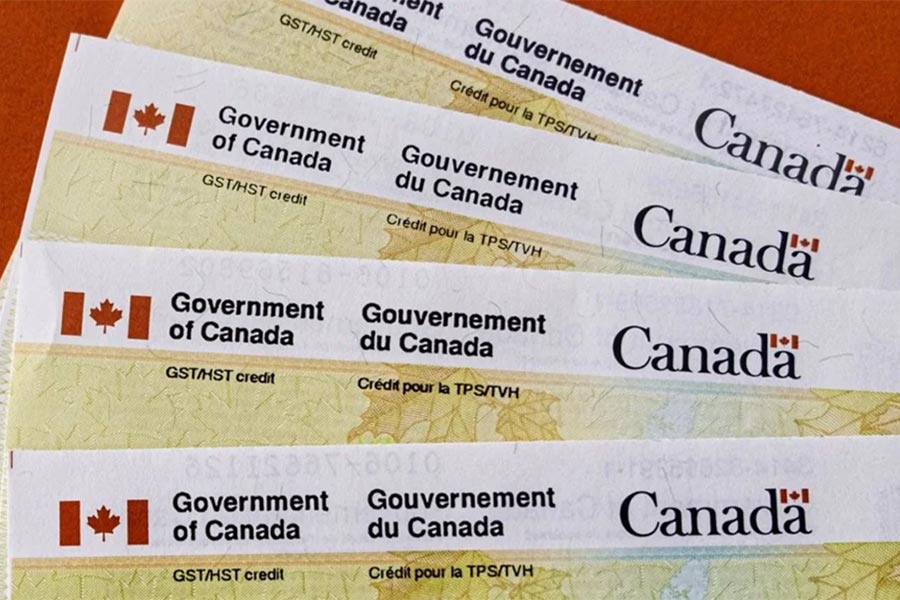
Hey there, fellow Canadians! Ever wonder what the Goods and Services Tax (GST) and Harmonized Sales Tax (HST) Credit is all about? You’re not alone. The GST/HST credit is a financial lifeline for many of us, especially those with low to modest incomes. This tax-free quarterly payment is designed to help offset the GST or HST you pay on goods and services. Let’s unravel the mystery of the GST/HST credit together, so you can make the most of this valuable benefit. We’ll explore what it is, who qualifies, how to apply, and more!
Update for 2026: Canada Groceries & Essentials Benefit (CGEB)
Starting in July 2026, the GST/HST credit is being replaced by the new Canada Groceries and Essentials Benefit (CGEB). This updated benefit keeps the same structure but provides higher payments to help Canadians deal with rising grocery and living costs.
Note: If you already receive the GST/HST credit, you will automatically transition to the CGEB — no application required.
What is GST/HST Credit?
So, what exactly is the GST/HST credit? At its core, the Goods and Services Tax (GST) and Harmonized Sales Tax (HST) Credit is a tax-free quarterly payment. It’s like getting a little financial boost every three months to help cover the GST or HST you pay on everyday purchases. This credit is especially helpful for individuals and families with lower incomes, making it a bit easier to manage those monthly expenses.
The GST was introduced in Canada back in 1991, and the HST followed in 1997 in some provinces, combining the federal GST with provincial sales tax. The idea behind the GST/HST credit is to provide financial relief to those who need it most, ensuring that the tax burden doesn’t disproportionately affect low-income Canadians.
Important Update: Beginning July 2026, the GST/HST credit transitions into the Canada Groceries and Essentials Benefit (CGEB), which increases payment amounts while keeping the same eligibility rules.
Eligibility for GST/HST Credit
Now, let’s talk eligibility. To get your hands on the GST/HST credit, you need to meet a few criteria. First and foremost, you must be a resident of Canada for income tax purposes. This means that you need to have a significant presence in the country and be subject to Canadian income tax.
But wait, there’s more! You also need to meet certain criteria regarding age, marital status, and income level. Here’s a quick rundown:
- Age: You must be at least 19 years old or older.
- Marital Status: Whether you’re single, married, or in a common-law relationship, your marital status will impact your eligibility and the amount of credit you receive.
- Income Level: Your family net income plays a crucial role. Generally, individuals and families with lower incomes are eligible for higher credits.
The Canada Revenue Agency (CRA) uses your income tax return to determine your eligibility and calculate your credit amount. So, make sure you file your taxes on time to ensure you’re in the running for the credit.
How to Apply for GST/HST Credit
Applying for the GST/HST credit is a breeze. All you need to do is file your income tax return. Yep, it’s that simple! The CRA will take care of the rest, automatically determining your eligibility and calculating your credit amount based on the information you provide.
Here’s a step-by-step guide to help you through the process:
- File Your Income Tax Return: Make sure you file your income tax return every year, even if you don’t have any income to report. This is crucial for the CRA to assess your eligibility.
- Provide Accurate Information: Double-check your personal information, including your marital status and the number of children you have, to ensure accuracy.
- Wait for Notification: The CRA will notify you if you’re eligible for the GST/HST credit and let you know the amount you’ll receive.
And voilà! You’re all set to receive your quarterly payments.
GST/HST Credit Payment Dates
Timing is everything, especially when it comes to those much-anticipated credit payments. The GST/HST credit is paid out quarterly, typically in January, April, July, and October.
For 2026, the CRA payment dates are:
| Quarter | Payment Month | Payment Date (2026) |
|---|---|---|
| Q1 | January | Around January 5th |
| Q2 | April | Around April 2nd |
| Q3 | July | Around July 3rd |
| Q4 | October | Around October 5th |
Here’s what you can expect:
- January: Kick off the new year with a little financial boost.
- April: Just in time for spring, another payment to help with those extra expenses.
- July: Summer’s here, and so is your quarterly credit.
- October: Get ready for the fall with another round of payments.
Keep an eye on your mailbox or bank account because the CRA will send you either a direct deposit or a cheque. If you’re ever unsure about the exact payment dates, the CRA website has a handy schedule to keep you in the loop.
2026 Transition Update
While the GST/HST credit continues for the first half of 2026, a new benefit takes over later in the year:
- June 2026: One-time extra payment (additional cost-of-living support)
- July 2026: First Canada Groceries & Essentials Benefit (CGEB) payment
- October 2026: Second CGEB payment
Note: This means 2026 includes both GST payments and CGEB payments in the same year.
Curious more about GST/HST payment dates and schedules? Or the new 2026 grocery benefit? Read our full guide on Canada benefits and payment dates for all the latest updates.
Calculating GST/HST Credit Amount
Now, let’s break down how the CRA calculates your GST/HST credit amount. It’s not a one-size-fits-all situation; the amount you receive depends on several factors:
- Family Net Income: The CRA uses your family net income from your income tax return to determine your credit amount. The lower your income, the higher the credit you may receive.
- Number of Children: If you have children under the age of 19, you’ll receive additional credits for each child.
- Marital Status: Whether you’re single, married, or in a common-law relationship, your marital status impacts your credit amount.
To make things easier, the CRA provides an online GST/HST credit calculator. This handy tool allows you to enter your income and family details to get an estimate of your credit amount. It’s a great way to get a ballpark figure of what you can expect.
How Much GST/HST Credit Can You Receive?
The amount of GST/HST credit you can expect to receive in 2026 depends on your adjusted family net income, marital status, and the number of children under 19 years of age in your care.
For the 2025–26 benefit year (based on your 2024 tax return, with payments from July 2025 to June 2026), the maximum amounts are:
- $533 if you are single.
- $698 if you are married or have a common-law partner.
- $184 for each child under the age of 19.
These payments are issued quarterly and are tax-free. The Canada Revenue Agency (CRA) calculates your eligibility and payment amounts based on your previous year’s tax return. Changes in your family net income, marital status, or the number of eligible children can affect the amount you receive.
If you’d like a more personalized estimate, you can use the CRA’s Child and family benefits calculator.
Canada Groceries & Essentials Benefit (CGEB)
The Canada Groceries and Essentials Benefit (CGEB) is the next evolution of the GST/HST credit. It’s designed to provide stronger financial support to low- and modest-income Canadians as the cost of living continues to rise.
What’s New with CGEB?
- Payments are 25% higher than the GST/HST credit (starting July 2026)
- Includes a one-time extra payment in June 2026
- Same eligibility rules and automatic payments through the CRA
Estimated Payment Amounts (2026–2027)
- Single: up to $679 per year
- Couple: up to $890 per year
- Per child: up to $234 per year
Note: With the one-time top-up included, total payments in 2026 may be significantly higher than previous years.
Who Qualifies?
If you qualified for the GST/HST credit, you will also qualify for the CGEB:
- Low to moderate income individuals and families
- Must file your income taxes
- Automatically assessed by the CRA
Note: No separate application is required.
What is the Maximum Income to Qualify for GST/HST?
The maximum income to qualify for the GST/HST credit depends on your family size and marital status. Below is a detailed breakdown of the maximum yearly entitlement for the 2026 payment period (based on the 2024 base year). For the most up-to-date figures, always refer to the CRA GST/HST Credit page.
Single Individuals
- No children: Maximum credit of $533 if your income is below $55,000.
- 1 child: Maximum credit of $901 if your income is below $62,000.
- 2 children: Maximum credit of $1,085 if your income is below $65,600.
- 3 children: Maximum credit of $1,269 if your income is below $69,200.
- 4 children: Maximum credit of $1,453 if your income is below $72,800.
Married or Common-Law Couples
- No children: Maximum credit of $698 if your family income is below $58,200.
- 1 child: Maximum credit of $901 if your family income is below $62,000.
- 2 children: Maximum credit of $1,085 if your family income is below $65,600.
- 3 children: Maximum credit of $1,269 if your family income is below $69,200.
- 4 children: Maximum credit of $1,453 if your family income is below $72,800.
Income Thresholds
As your adjusted family net income increases, the GST/HST credit amount gradually decreases. For example:
- Single individuals earning $55,000 or more will receive $0.
- Married couples with four children earning $72,800 or more will receive $0.
These amounts are paid quarterly and are tax-free. The Canada Revenue Agency (CRA) uses your 2024 tax return to determine eligibility and payment amounts for the 2025–26 benefit year. Changes in marital status, family size, or income can affect your entitlement.
Impact of Income Changes on GST/HST Credit
Life is full of changes, and your GST/HST credit can be affected by changes in your income, marital status, or number of children. It’s important to keep the CRA informed of any changes to ensure you receive the correct amount.
Here’s how different changes can impact your credit:
- Income Changes: If your family net income increases or decreases, it will directly affect the amount of GST/HST credit you receive. A higher income may reduce your credit, while a lower income may increase it.
- Marital Status Changes: Getting married, entering a common-law relationship, or separating can impact your credit amount. Make sure to update your marital status with the CRA.
- Number of Children: If you have a new child or your child turns 19, it will affect the additional credits you receive for each child.
To report changes, you can use the CRA’s “My Account” online service or contact them directly. Keeping your information up-to-date ensures you receive the correct amount and avoid any surprises.
GST/HST Credit for Newcomers to Canada
Welcome to Canada! If you’re new to the Great White North, you might be eligible for the GST/HST credit. Newcomers to Canada can qualify for this financial benefit if they meet certain residency and income requirements.
Here’s what you need to know:
- Residency Requirements: You must be a resident of Canada for income tax purposes. This means you have established significant ties to the country, such as having a home, a spouse or common-law partner, and dependents in Canada.
- Income Requirements: Your family net income must fall within the eligible range to qualify for the credit.
- File an Income Tax Return: Even if you arrived in Canada partway through the year, make sure to file an income tax return to apply for the GST/HST credit.
Once you’ve filed your taxes, the CRA will assess your eligibility and calculate your credit amount. It’s a great way to get a little financial support as you settle into your new life in Canada.
New to Canada? Don’t miss our Newcomers to Canada: The Ultimate Guide, your complete step-by-step resource for settling in Canada.
Read More Helpful Resources on All Review
Looking for more Canadian resources? Browse our collection of in-depth guides covering government benefits, housing, education, and much more—all designed to help you navigate life in Canada with confidence.
Federal & Provincial Benefits
- Canada Groceries & Essentials Benefit (CGEB)
- Canada Child Benefit (CCB)
- Employment Insurance (EI)
- Disability Tax Credit (DTC)
- Canada Pension Plan (CPP)
- Old Age Security (OAS)
- Ontario Trillium Benefit (OTB)
- Canada Workers Benefit CWB and ACWB
- Canada Training Credit
Government, Education & Living in Canada
- CRA My Account Registration Guide
- Social Insurance Number (SIN) Application Guide
- My Service Canada Account (MSCA) Guide
- Minimum Wage by Province
- Best Universities in Canada
- Best Cities to Live in Canada
- Buying a House in Canada Guide

More GST/HST Credit FAQs
You probably have a few questions about the GST/HST credit, and that’s perfectly normal. Here are some common questions and answers to help clear things up:
For more detailed information and answers to other questions, the CRA website is a fantastic resource.
Conclusion
The GST/HST credit is a valuable benefit designed to ease the financial burden of taxes for eligible Canadians. By understanding the application process, eligibility criteria, and how to report changes in your situation, you can ensure you receive the maximum benefit available. Whether you’re a long-time resident or a newcomer to Canada, the GST/HST credit can provide a little extra financial support to help you manage your expenses.
With the introduction of the Canada Groceries and Essentials Benefit (CGEB) in 2026, Canadians can expect increased support alongside existing benefits.
So, fellow Canadians, take advantage of this benefit and make the most of it. Stay informed, keep your information up-to-date, and enjoy the peace of mind that comes with a little extra financial assistance. If you have any more questions or need further details, the CRA website is always there to help. Here’s to making the most of every loonie and toonie!
Statistics and Information Sources:
- Government of Canada website
- Link: https://www.canada.ca/en/revenue-agency/services/child-family-benefits/gst-hst-credit.html