

New to Canada?
If you’re new to Canada, don’t miss our Newcomers to Canada: The Ultimate Guide. It covers everything you need to know about settling in Canada, including housing, employment, healthcare, banking, education, government benefits, and much more.
Food insecurity is rising in Canada—but so is support.
Right now in Canada, nearly 1 in 4 people are living in households that face food insecurity. Over 2 million visits were made to food banks in just one month—These numbers reflect a growing crisis affecting not just the unemployed or homeless, but also working Canadians, students, seniors, and families trying to keep up with rising costs.
Across the country, food banks have become a lifeline for those feeling the pinch—If you or someone you love is struggling, know this: help is available, and there’s no shame in asking for it.
Food banks are here to support you—no questions asked, no judgment given. Whether you’re living on a fixed income, navigating a difficult time, or simply can’t stretch your grocery budget any further, you’re not alone.
If you’re unsure about how food banks work or whether you qualify, this guide walks you through everything you need to know to get help from a food bank in Canada—step by step.
Who Can Access a Food Bank in Canada?
The short answer? Anyone who needs it.
Food banks in Canada are open to all individuals and families experiencing food insecurity—regardless of age, immigration status, employment situation, or background. You don’t have to be on social assistance or have no income at all to use one. Many food bank clients are:
- Working adults or parents whose wages don’t cover basic needs
- Seniors living on CPP or OAS with limited pension income
- Students facing high tuition and rent costs
- Newcomers waiting for work or permanent status
- People on disability or EI benefits
- Those dealing with a personal crisis, illness, or emergency
If you’re having trouble affording groceries, you qualify.
What You Need to Bring When Visiting a Food Bank
While every food bank is a bit different, most will ask for the following on your first visit:
- Government-issued ID (for yourself and any household members)
- Examples: health card, driver’s licence, PR card, passport, student ID
- Proof of address
- Examples: recent bill, bank statement, lease agreement, government letter
- Optional: Proof of income or benefits (ODSP, EI, pay stub), especially if registering
Not having everything shouldn’t stop you from going. If you’re in urgent need, many locations will still provide assistance and help you gather documents later.
What to Expect During Your First Visit
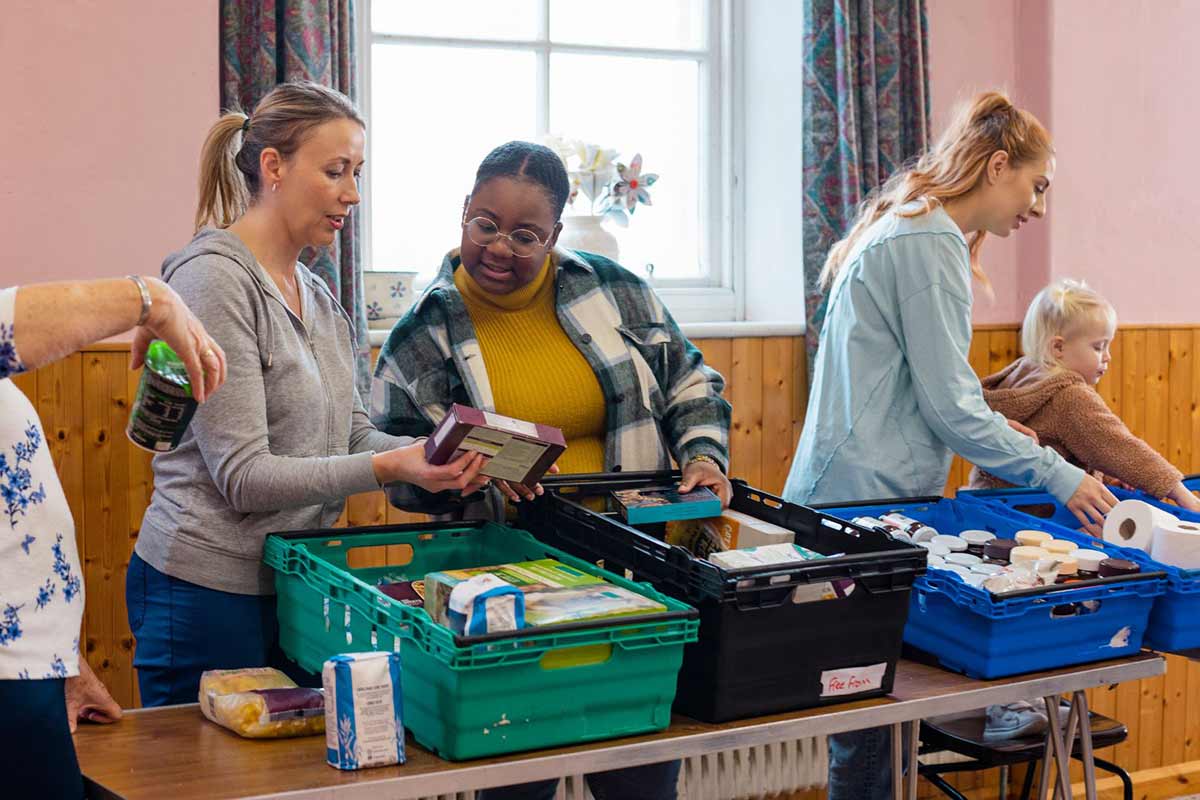
Food banks are safe, welcoming spaces built on respect and dignity.
Here’s how a typical first visit goes:
- Check-In: You’ll be greeted by a staff member or volunteer who will walk you through the intake process.
- Intake Interview: You may be asked a few confidential questions about your situation (income level, number of people in your household, dietary needs). This helps tailor the support.
- Food Pickup: Depending on the setup, you’ll receive a pre-packed box/bag or get to “shop” from shelves stocked with available items.
- Follow-Up Info: You’ll be told how often you can return, and may be offered referrals to other local services if needed.
Food bank volunteers understand that asking for help can feel tough. But you won’t be judged—only supported.
Help Fight Hunger—Find Out How You Can Donate to Food Banks Canada!
Whether it’s non-perishable food or a financial gift, your support makes a real difference. Donate Now!

What Kinds of Food Do Food Banks Offer?
What you receive depends on availability and donations, but most food banks offer a combination of:
- Non-perishables: Canned vegetables, soup, beans, pasta, rice, cereal, peanut butter, sauces, tuna, lentils
- Fresh produce: Fruits, vegetables (when in season or supplied)
- Frozen items: Meats, entrees, veggies, when available
- Dairy & protein: Eggs, milk, yogurt (limited)
- Hygiene products: Soap, toothpaste, menstrual products
- Baby supplies: Diapers, formula, baby food (if available)
- Culturally appropriate items: Some locations offer halal, kosher, or ethnically preferred foods
The food you receive is meant to supplement—not replace—your grocery needs for about 3–5 days.
How Often Can You Visit a Food Bank?
This depends on the policies of your local food bank. In general:
- Most allow visits every 14–30 days
- Emergency visits may be allowed more often
- Some food banks have weekly pickup days or mobile services for specific neighbourhoods
If your situation is urgent, ask staff if additional support is available.
Top Food Bank Networks Across Canada
While there are hundreds of individual food banks, many belong to national or provincial networks. Here are some key organizations:
Food Banks Canada
Website: foodbankscanada.ca
The national body coordinating support across 10 provinces and 3 territories.
Daily Bread Food Bank (Toronto, ON)
Website: dailybread.ca
Supports over 130 food programs across the GTA.
Moisson Montréal (QC)
Website: moissonmontreal.org
Canada’s largest food bank by volume—serves over 300 organizations.
Calgary Food Bank (AB)
Website: calgaryfoodbank.com
Provides 100,000+ food hampers yearly.
Edmonton’s Food Bank (AB)
Website: edmontonsfoodbank.com
Regina and Saskatoon Food Banks (SK)
Website: reginafoodbank.ca / saskatoonfoodbank.org
Feed Nova Scotia (NS)
Website: feednovascotia.ca
Supports food banks across the province and runs mobile pantries.
Use the Food Banks Canada website to locate a member agency in your province.
How to Find a Food Bank Near You
Here are 3 simple ways to find help nearby:
1. Use 211.ca
- Visit www.211.ca and enter your postal code
- You’ll find listings for food banks, shelters, and meal programs
2. Visit foodbankscanada.ca
- Use their “Find a Food Bank” tool to locate member organizations
3. Call 211 or your local community services
- They can connect you to a nearby agency, especially if you need help urgently
Bonus tip: Many local Facebook groups and neighbourhood associations also post updated food bank hours and pop-up events.
Did You Know…
- Nearly 1 in 4 Canadians—almost 25%—live in households experiencing food insecurity.
- Over 2 million visits were made to Canadian food banks in March 2024 alone—a record figure and nearly double the 2019 level (a 90 % increase).
- Roughly 28% of families with children say they’re likely to need a food bank in the next six months.
- 18 % of food bank users in Canada are employed—the highest proportion ever recorded.
- More than 50 % of Canadians are just one missed paycheck away from needing to use a food bank.

Other Free Food Assistance Options in Canada
Food banks aren’t the only places offering food support. You can also check out:
Community Fridges
Public fridges stocked with food that anyone can take or contribute to—found in many cities like Toronto, Ottawa, and Vancouver.
Soup Kitchens & Meal Programs
Drop-in centres, churches, and shelters often serve free hot meals, no questions asked.
School-Based Nutrition Programs
Elementary and secondary schools often offer breakfast or snack programs for students.
Seniors’ Meal Delivery
Programs like Meals on Wheels deliver food to older adults and those with mobility issues.
Indigenous-Led Food Sovereignty Programs
Some Indigenous communities run food banks, community gardens, and fish/meat sharing initiatives.
Your Rights and Dignity at a Food Bank
It’s important to know:
- You are not alone. Over 2 million visits to food banks happen in Canada each year.
- You will be treated with respect. All food bank staff and volunteers are trained to offer dignified, non-judgmental service.
- You have a right to confidentiality. Your information will not be shared with landlords, employers, or government agencies without consent.
- You deserve help. Asking for support does not reflect on your worth or ability. It takes strength to reach out.
How to Get Long-Term Support
Many food banks partner with local social services to help clients find longer-term solutions. Ask staff about:
- Housing support services
- Employment and job training programs
- Mental health and addiction counselling
- Financial literacy workshops
- Applying for benefits: CPP, ODSP, CCB, GST credits, Trillium Benefit, and more
The goal is not just to feed—but to help rebuild stability.
You’re not alone — and support goes beyond food.
Canada offers a number of benefits to help individuals and families in tough times. Read Our Guide to Canadian Benefits and Payments.

Read More Helpful Resources on All Review
Looking for more Canadian resources? Browse our collection of in-depth guides covering government benefits, housing, education, and much more—all designed to help you navigate life in Canada with confidence.
Federal & Provincial Benefits
- Canada Child Benefit (CCB)
- Employment Insurance (EI)
- Disability Tax Credit (DTC)
- Canada Pension Plan (CPP)
- Old Age Security (OAS)
- Ontario Trillium Benefit (OTB)
- Canada Workers Benefit CWB and ACWB
- Canada Training Credit
Government, Education & Living in Canada
- CRA My Account Registration Guide
- Social Insurance Number (SIN) Application Guide
- My Service Canada Account (MSCA) Guide
- Minimum Wage by Province
- Best Universities in Canada
- Best Cities to Live in Canada
- Buying a House in Canada Guide
- How to Donate to Food Banks Canada
Food Bank FAQs in Canada
Got questions about food banks? Here are quick answers to what Canadians are asking most in 2026.
Final Thoughts: When You Need Help, Help Is Here
Food insecurity can happen to anyone. It doesn’t matter how you got here—what matters is that there are people ready to help you through it.
Across Canada, food banks operate with compassion and a sense of community. They’re built for Canadians, by Canadians—often staffed by volunteers who care deeply and ask nothing in return.
If you or someone you know needs help, don’t wait. Reach out. You’ll be met with kindness, support, and a reminder that you’re never alone.
Statistics Information & More Helpful Resources:
- Canada Benefits Finder tool
- Hunger in Canada
- Find a Food Bank near you