

New to Canada?
If you’re new to Canada, don’t miss our Newcomers to Canada: The Ultimate Guide. It covers everything you need to know about settling in Canada, including housing, employment, healthcare, banking, education, government benefits, and much more.
Hey there, fellow Canadians! If you’re like many of us who have been diligently contributing to the Canada Pension Plan (CPP) throughout your working years, you’re probably curious about when you can start reaping the benefits. Navigating the world of CPP can sometimes feel like decoding the fine print of a hockey playoff schedule, but don’t worry—I’ve got you covered. In this article, we’ll walk through everything you need to know about CPP payment dates, eligibility, maximizing your payouts, and more. So grab a cup of your favorite Tim Hortons coffee, and let’s dive in!
Canada Pension Plan (CPP) Overview
The Canada Pension Plan (CPP) is a critical component of our social safety net. Established in 1966, the CPP provides retirement, disability, and survivor benefits to eligible Canadians. It’s a program that’s designed to ensure that after years of hard work, Canadians can enjoy a secure and comfortable retirement.
The CPP is funded by contributions from workers, employers, and self-employed individuals. These contributions are invested by the CPP Investment Board, which aims to generate returns that will sustain the plan for generations to come.
CPP Eligibility Requirements
Before we get into the nitty-gritty of payment dates, it’s essential to understand who qualifies for CPP benefits. To receive CPP benefits, individuals must have made contributions during their working years. These contributions are based on your earnings and are deducted from your paycheck, with your employer also making a matching contribution. If you’re self-employed, you’re responsible for both the employee and employer portions.
You can start receiving CPP retirement benefits as early as age 60, but there’s a catch—taking benefits early means you’ll receive a reduced monthly amount. On the flip side, if you delay receiving CPP until age 70, your monthly benefits will be higher. It’s all about finding the right balance that works for your financial situation and retirement plans.
CPP Payment Dates and Schedule for 2026
Now, let’s get to the part you’ve been waiting for—when can you expect to receive your CPP payments? Payments are typically deposited monthly, and knowing the exact dates can help you plan your finances better.
Here’s the official breakdown of the CPP payment dates for 2026 (these apply to retirement, disability, survivor and other CPP benefits):
CPP Payment Dates 2025:
- January 29, 2025
- February 26, 2025
- March 27, 2025
- April 28, 2025
- May 28, 2025
- June 26, 2025
- July 29, 2025
- August 27, 2025
- September 25, 2025
- October 29, 2025
- November 26, 2025
- December 22, 2025 (earlier due to year-end holidays)
CPP Payment Dates 2026:
- January 28, 2026
- February 25, 2026
- March 27, 2026
- April 28, 2026
- May 27, 2026
- June 26, 2026
- July 29, 2026
- August 27, 2026
- September 25, 2026
- October 28, 2026
- November 26, 2026
- December 22, 2026 (earlier due to year-end holidays)
Mark these dates on your calendar or set up reminders on your phone so you won’t miss them!
How to Receive CPP Payments
To ensure you receive your CPP payments on time, it’s crucial to set up direct deposit through your My Service Canada Account. Direct deposit is the most efficient and secure way to receive your benefits. It eliminates the need for paper checks and ensures that your money is deposited directly into your bank account on the scheduled payment date.
If you haven’t already set up direct deposit, it’s a straightforward process:
- Sign in to your My Service Canada Account.
- Navigate to the “Direct Deposit” section.
- Enter your banking information, including your bank account number, branch number, and financial institution number.
- Save your information and confirm the setup.
Once you’ve set up direct deposit, you can rest easy knowing your CPP payments will be deposited automatically each month.
CPP Benefit Amounts and Increases
One of the great things about the CPP is that it’s periodically enhanced to reflect inflation and wage growth. This means that the amount you receive in CPP benefits can increase over time, helping you keep up with the rising cost of living.
For 2026, the maximum monthly CPP retirement pension at age 65 has been updated to approximately $1,507.65/month as of January 2026 (this applies to new beneficiaries based on contributions and CPP enhancement rules).
By comparison:
- Maximum CPP pension at age 65 in 2025 was about $1,433.00/month.
- The average CPP pension at age 65 (based on data from late 2025) was approximately $803.76/month.
These figures are designed to adjust periodically and depend on how long and how much you contributed, along with the age you choose to start your pension.
Maximizing CPP Payouts
Everyone wants to get the most out of their CPP benefits, and there are several strategies you can employ to maximize your payouts:
- Delay Your Start Date: As mentioned earlier, you can start receiving CPP as early as age 60, but your monthly benefits will be reduced. If you can afford to wait, delaying your start date until age 70 can result in significantly higher monthly payments.
- Work Longer: The longer you work and contribute to the CPP, the higher your benefits will be. This is especially true under the enhanced CPP, which came into effect in 2019.
- Utilize Drop-In Provisions: The CPP has provisions that allow you to exclude periods of low or no earnings from your benefit calculation. This can be especially helpful if you’ve had gaps in your employment history or took time off for reasons such as raising a family or pursuing further education.
- Contribute at Higher Income Levels: If you’re in a position to do so, contributing to the CPP at higher income levels can increase your average earnings and, in turn, your benefits.
- Coordinate with Other Income Sources: If you have other sources of retirement income, such as an RRSP or employer pension plan, consider how these sources can work together to provide a secure financial foundation. Balancing your CPP with other income sources can help you achieve a more comfortable retirement.
Taxation of CPP Payments
It’s important to note that CPP payments are considered taxable income and must be reported on your tax return. This means that the amount you receive in CPP benefits will be subject to federal and provincial income taxes.
To make tax time easier, you can request that taxes be withheld from your CPP payments. This way, you won’t have to worry about a large tax bill at the end of the year. You can set up tax withholding through your My Service Canada Account or by contacting Service Canada directly.
Additional Resources for CPP Information
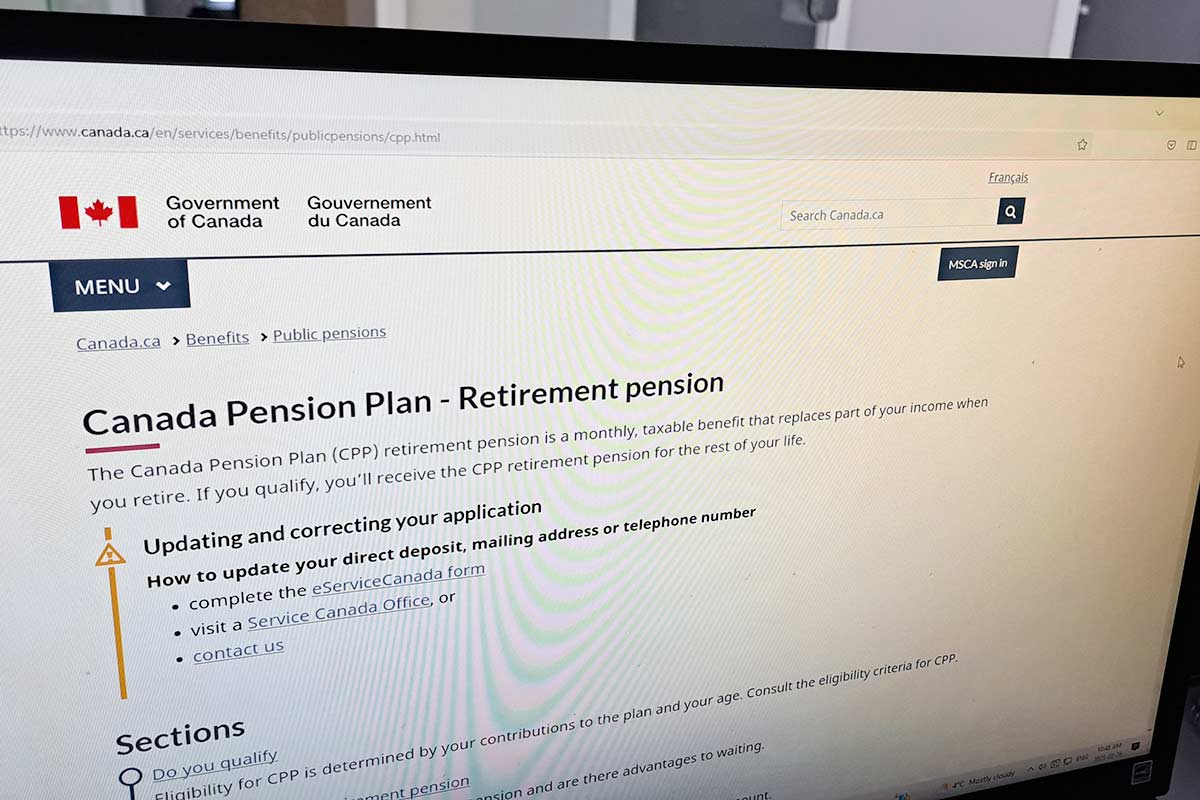
The Canada Pension Plan is a complex program, and there’s always more to learn. For additional information and resources, be sure to visit the canada.ca website. Here, you’ll find detailed guides, frequently asked questions, and tools to help you navigate the CPP.
Planning your monthly government payments?
Check the Canada Benefits Payment Dates Guide to see all upcoming benefit deposit dates.

More CPP Payments FAQs
Let’s address some common questions that many Canadians have about the CPP Payments:
Conclusion
Navigating the world of CPP doesn’t have to be daunting. With a little knowledge and planning, you can make the most of your benefits and enjoy a secure and comfortable retirement. Remember to mark those payment dates on your calendar, set up direct deposit, and consider strategies to maximize your payouts. And of course, don’t hesitate to reach out to Service Canada or visit their website for any additional information you may need.
So, whether you’re gearing up for retirement or just planning ahead, I hope this guide has provided you with the insights and confidence to make the most of your CPP. Here’s to a bright and secure future, filled with all the things you love. Cheers, fellow Canadians!
Statistics and Information Sources:
- Government of Canada website
- Link: https://www.canada.ca/en/services/benefits/publicpensions/cpp.html