
New to Canada?
If you’re new to Canada, don’t miss our Newcomers to Canada: The Ultimate Guide. It covers everything you need to know about settling in Canada, including housing, employment, healthcare, banking, education, government benefits, and much more.
With the cost of living putting a tight squeeze on household budgets across Canada, online headlines have been buzzing with news about a “Canadian $628 grocery rebate.”
If you are trying to figure out if this payment is real, when it arrives, and how much money you will actually get, you are in the right place. At AllReview.ca, we break down government programs and consumer updates without the fluff.
The short answer? The specific $628 figure is a mix of older program numbers and viral online headlines—but the reality behind it is even better. The federal government has launched a permanent replacement program called the Canada Groceries and Essentials Benefit (CGEB) under Bill C-19, and millions of Canadians are seeing immediate money because of it.
Is the Canadian $628 Grocery Rebate Real
Yes and no. The specific phrase “Canadian $628 grocery rebate” became a viral search term because $628 was the exact historical maximum amount a low-income family with four children received during a previous, one-time emergency grocery adjustment.
The internet has kept that specific $628 number alive, but the underlying program has completely changed. In 2026, the federal government officially passed Bill C-19, retiring the traditional GST/HST credit structure and replacing it permanently with the Canada Groceries and Essentials Benefit (CGEB).
The new CGEB rollout consists of a two-part funding boost:
- The June 5, 2026 Transition Payment: A one-time lump sum equal to 50% of your annual credit value, sent out to provide immediate cost-of-living relief.
- The Permanent 25% Quarterly Boost: Starting July 2026, regular quarterly payments are permanently increased by 25% for the next five years (2026 to 2031).
What is the Difference Between the GST/HST Credit and the CGEB?
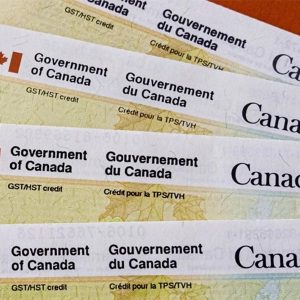
The Canada Groceries and Essentials Benefit is essentially the long-standing GST/HST credit program—just completely rebranded, expanded, and significantly topped up with extra cash.
The government renamed the program to better reflect its purpose: helping low- and modest-income Canadians manage the heavily inflated cost of food and everyday household necessities. While the system operates on the exact same backend infrastructure as the old GST credit, the payment amounts are much higher, starting with the June 2026 rollout.
When Are the CGEB Payment Dates for 2026?
You do not receive the entire benefit all at once. Instead, the money is split between a one-time “bridge” payment and regular quarterly distributions.
One-Time Transitional Top-Up
June 5, 2026
The CRA issued a one-time 50% lump-sum bonus directly into bank accounts or via mail. This acts as immediate relief before the permanent quarterly increases kick in.
Q1 Regular Payment
July 3, 2026
This is the first official payment under the Canada Groceries and Essentials Benefit. The payment reflects the new 25% increase introduced by the federal government.
Q2 Regular Payment
October 5, 2026
The second enhanced quarterly payment of the 2026–2027 benefit cycle.
Q3 Regular Payment
January 5, 2027
The first quarterly distribution of the new calendar year.
Q4 Regular Payment
April 5, 2027
The final quarterly payout of the 2026–2027 tax benefit cycle.
How Much Will I Actually Get? (2026 CGEB Payout Matrix)
Your actual payment depends entirely on your marital status, your adjusted family net income, and how many children you have.
The CRA uses a sliding scale, meaning the maximum amounts go to the lowest income brackets and gradually phase out as your household income climbs.
| Household Type | June 5, 2026 Top-Up | Enhanced Annual Base (July 2026 – June 2027) | Total Maximum 2026 Benefit |
|---|---|---|---|
| Single Individual (No kids) | $267 | $679 | $950 |
| Single Parent (1 child) | $395 | $913 | $1,308 |
| Married/Common-Law (No kids) | $349 | $890 | $1,239 |
| Family (Couple + 1 child) | $441 | $1,124 | $1,565 |
| Family (Couple + 2 kids) | $533 | $1,356 | $1,890 |
| Family (Couple + 4 kids) | $717 | $1,824 | $2,541 |
Note on Children: For the ongoing quarterly base portion, families receive an additional $234 per year for each eligible child under the age of 19.
What Are the CGEB Income Cut-Off Thresholds?
To receive the maximum payments listed in the table above, your household income must fall within the lower tax brackets. As your net income increases, the benefit amount steadily drops until it reaches zero.
The absolute income caps to receive even a partial, prorated payment generally top out at:
- Single Individuals: Net income must be below $56,181
- Larger Families/Couples: Net income must be below $74,201
If your household net income is higher than these thresholds, you will not qualify for the CGEB.
Did You Know
- The benefit is not limited to groceries despite its name
- Missing your tax filing can delay payments for an entire year
- Over 12 million Canadians are expected to benefit
- A family of four can receive nearly $1,900 in 2026
- The 25% boost lasts until 2031
Do I Need to Apply for the Canadian Grocery Rebate?
No. There is no application process, and you do not need to submit grocery store receipts.
The entire system is completely automatic and is handled directly through your annual personal income tax filings:
- To get the June 5 top-up: The CRA automatically reviewed your 2024 tax return.
- To get the ongoing quarterly payments: The CRA switches over to your 2025 tax return. If you haven’t filed your 2025 taxes yet, your upcoming quarterly payments will be paused.
Co-Parenting & Shared Custody Rules
If you share custody of your children under an agreement recognized by the CRA, the child allocations are split 50/50. Both parents will receive exactly half of the child-related portion of the top-up and base benefit, deposited separately into their respective accounts.
Can the CRA Take My Grocery Rebate If I Owe Money?
Yes. Unlike some previous emergency relief payments, the CGEB is subject to standard CRA debt collections. If you have outstanding personal income tax debt, a balance owing from previous benefit overpayments, or other federal government debts, the CRA has the right to automatically apply your June 5 top-up or quarterly CGEB payments to reduce your outstanding balance.
If this happens and it causes severe financial hardship, you are advised to call the CRA directly to arrange a payment schedule.
Why Didn’t I Receive My June 5 Payment?
If June 5 has passed and you haven’t seen any money in your account, it usually comes down to one of four reasons:
- Income Thresholds: Your 2024 adjusted family net income was too high to qualify.
- Missing Tax Filings: You or your spouse have outstanding tax returns from 2024, meaning the CRA couldn’t calculate your eligibility.
- Mail Delays: If you do not have direct deposit set up with the CRA, a physical paper check is sent in the mail, which takes longer to arrive.
- CRA Debt Offset: As mentioned above, your payment may have been instantly used to cover an existing government debt.
Is the Canada Groceries and Essentials Benefit Taxable?
No. The Canada Groceries and Essentials Benefit is completely tax-free. You do not have to report this money as taxable income on your tax return next spring, and it will not lower your eligibility for other federal or provincial programs like the Canada Child Benefit (CCB) or provincial low-income supplements.
Security Alert: Watch Out for CGEB Scams
Because the transition to the Canada Groceries and Essentials Benefit is a massive news item, text and email scammers are incredibly active right now.
Crucial Rule: The CRA will never send you a text message or an email with a link asking you to click to “apply,” “register,” or “claim” your grocery rebate.
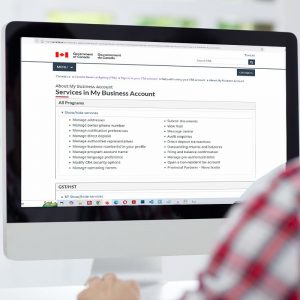
Common phishing scams include fake Interac e-Transfer notifications or mock government portals designed to steal your Social Insurance Number (SIN) and bank login details. If you want to check if a payment was actually issued to you, close the message, open a clean browser tab, and log directly into your official, secure CRA My Account portal.
Want to see how this compares to other benefits?
Explore our full guide on Canadian government benefits and payment dates to maximize your support. Learn more.
FAQs About Canada Groceries and Essentials Benefits
Here are answers to common queries about Canada Groceries & Essentials Benefit:
Conclusion: The Bottom Line
While the viral “$628 grocery rebate” headlines don’t tell the whole story, the actual program behind them—the Canada Groceries and Essentials Benefit—is a significant upgrade. By locking in an immediate lump-sum top-up and a permanent 25% quarterly boost for the next five years, it provides predictable, ongoing support where Canadians need it most.
To keep your payments rolling out smoothly without interruption, simply ensure your tax filings are up to date and your direct deposit info is verified with the CRA.
Statistics and Information Sources:
- Government of Canada website
- Link: https://www.canada.ca/en/revenue-agency/services/child-family-benefits/canada-groceries-essentials-benefit.html
- Link: https://www.canada.ca/en/services/benefits.html