
How to Troubleshoot a Dishwasher That Won’t Start

If your dishwasher won’t start, check the power, door latch, and control lock. Make sure it’s plugged in, the door is fully closed, and the breaker isn’t tripped. Try a reset by holding the start button or unplugging it for a minute.

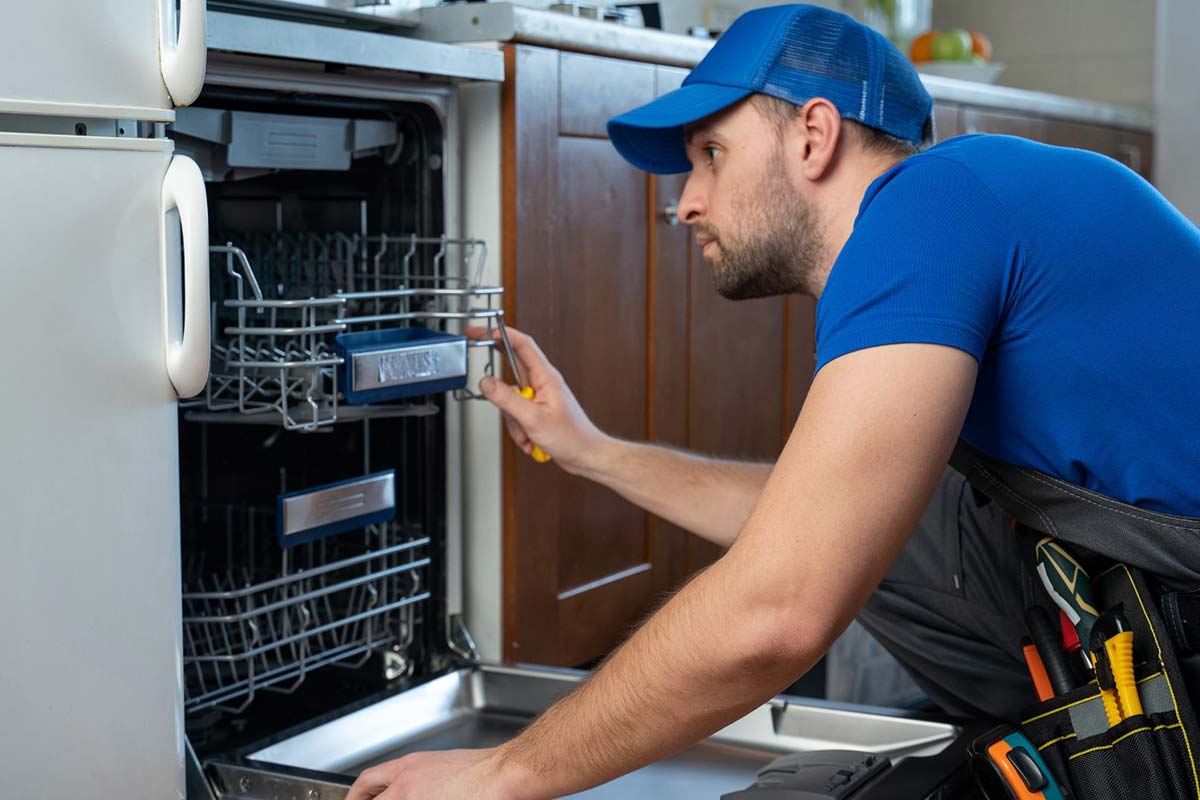
Technician repairing dishwasher in kitchen

Dishwashers are an essential part of modern kitchens, but when they refuse to start, it can be frustrating. While some issues require professional help, many problems can be resolved with a bit of troubleshooting. Here’s a guide to diagnosing the most common causes of a non-starting dishwasher.

1. Check the Power Supply

Before diving into repairs, ensure the dishwasher is getting power. Inspect the outlet, breaker, and power cord for any signs of damage or loose connections.

2. Verify the Door Latch

If the door isn’t securely closed, the dishwasher won’t start. Inspect the door latch for wear and tear, and ensure it clicks into place properly.

3. Examine the Control Panel

A malfunctioning control panel can prevent your dishwasher from starting. Check for error codes, unresponsive buttons, or a blank display. If you need guidance on tackling control panel issues, find detailed insights here.

4. Look at the Timer

The timer regulates the dishwasher’s cycles. If it’s defective, the appliance might not start. Test the timer with a multimeter or consult a technician for further diagnosis.

5. Inspect the Water Supply

Dishwashers require a steady flow of water to operate. Check the water inlet valve, hoses, and connections for blockages or leaks.

6. Evaluate the Thermal Fuse

The thermal fuse is a safety feature that cuts power to the dishwasher when it overheats. A blown thermal fuse can prevent the machine from starting and may need replacement.

7. Test the Motor

The motor powers the spray arms and ensures proper cleaning. If it’s burnt out or stuck, the dishwasher won’t run.

8. Consider the Float Switch

The float switch monitors water levels inside the dishwasher. A stuck or faulty float switch can send incorrect signals, stopping the machine from starting.

Statistics on Dishwasher Issues

  • Approximately 20% of all dishwasher problems are related to the door latch or control panel.
  • Simple troubleshooting can resolve over 30% of non-starting dishwasher cases without professional help.

Quotes to Remember

As Thomas Edison once said, “The value of an idea lies in the using of it.” Troubleshooting appliances is all about leveraging knowledge to resolve everyday issues.

Steps to Troubleshoot Your Dishwasher

  1. Check the power source and ensure the outlet is functioning.
  2. Inspect the door latch for proper alignment and function.
  3. Examine the control panel for error codes or unresponsive buttons.
  4. Inspect the water supply and clean any clogged hoses or valves.

When to Call a Professional

If the problem persists after these steps, it might be time to call a technician. Attempting complex repairs without the right tools can lead to further damage. Addressing the issue promptly will save you time, money, and hassle in the long run.

Whether it’s a simple door latch fix or a more complicated motor repair, understanding the root cause is the first step in getting your dishwasher back in working order.


Related Posts

Canadian Family choosing vegetables and shopping in supermarket

Canada Groceries & Essentials Benefit 2026: Full Guide for Canadians / Prestation canadienne pour l’alimentation et les produits essentiels 2026 : Guide complet pour les Canadiens

The Canada Groceries & Essentials Benefit (CGEB) is a tax-free payment from the Canada Revenue Agency that helps low- and modest-income Canadians cover the cost of groceries and essential expenses. In 2026, eligible Canadians will receive a one-time payment on June 5 equal to 50% of their GST/HST credit, followed by increased quarterly payments starting in July 2026. No application is required, as eligibility is automatically determined through your tax return. /
L’Allocation canadienne pour l’alimentation et les produits essentiels (ACAPE) est un versement non imposable de l’Agence du revenu du Canada qui aide les Canadiens à faible revenu et à revenu modeste à couvrir leurs dépenses d’épicerie et autres dépenses essentielles. En 2026, les Canadiens admissibles recevront un paiement unique le 5 juin, équivalent à 50 % de leur crédit pour la TPS/TVH, suivi de versements trimestriels plus élevés à compter de juillet 2026. Aucune demande n’est requise, car l’admissibilité est automatiquement déterminée à partir de votre déclaration de revenus.

Person searching on newspaper obituaries in Canada

How to Search Newspaper Obituaries in Canada (Free Archives Guide 2026)

To search newspaper obituaries in Canada, start with local newspaper obituary archives, online obituary databases, genealogy websites, and free newspaper archive collections. Many Canadian newspapers such as the Toronto Star, Globe and Mail, Vancouver Sun, and Montreal Gazette maintain searchable obituary archives that can help confirm deaths, locate funeral notices, and uncover valuable family history information.

Louvered Pergola setup inside a house in Canada

Metal Pergolas vs Traditional Materials: Durability, Style, and Value

Metal pergolas outperform traditional materials like wood and vinyl in durability, maintenance, and long-term value. They resist corrosion, handle harsh weather conditions better, require minimal upkeep, and provide a modern appearance that lasts for years.

Canadian looking for obituary records in newspaper

How to Find Free Obituaries in Canada (2026 Complete Guide)

You can find free obituaries in Canada by searching online obituary websites like Echovita and Legacy.com, checking Canadian newspaper archives, and using cemetery databases such as Find A Grave. Most recent obituaries are publicly available at no cost and can be found by searching the person’s full name along with their location or province.

How to Get Death Records in Canada article image

How to Get Death Records in Canada (2026 Complete Guide)

To get death records in Canada, you must apply through the provincial Vital Statistics office where the death occurred. Canadian death records include death certificates, death registrations, and official extracts used for legal, financial, and genealogy purposes. Access rules, fees, and processing times vary by province, and recent records are often restricted to family members or legal representatives.

Best Genealogy Websites for Canadian Family Research article image a

Best Genealogy Websites for Canadian Family Research (2026 Guide)

If you are researching your family history in Canada, the best genealogy websites in 2026 are Ancestry, FamilySearch, MyHeritage, and Library and Archives Canada. These platforms provide access to Canadian census records, immigration documents, military records, birth and death registrations, and historical archives that help Canadians build detailed family trees and trace generations of relatives across the country and abroad.