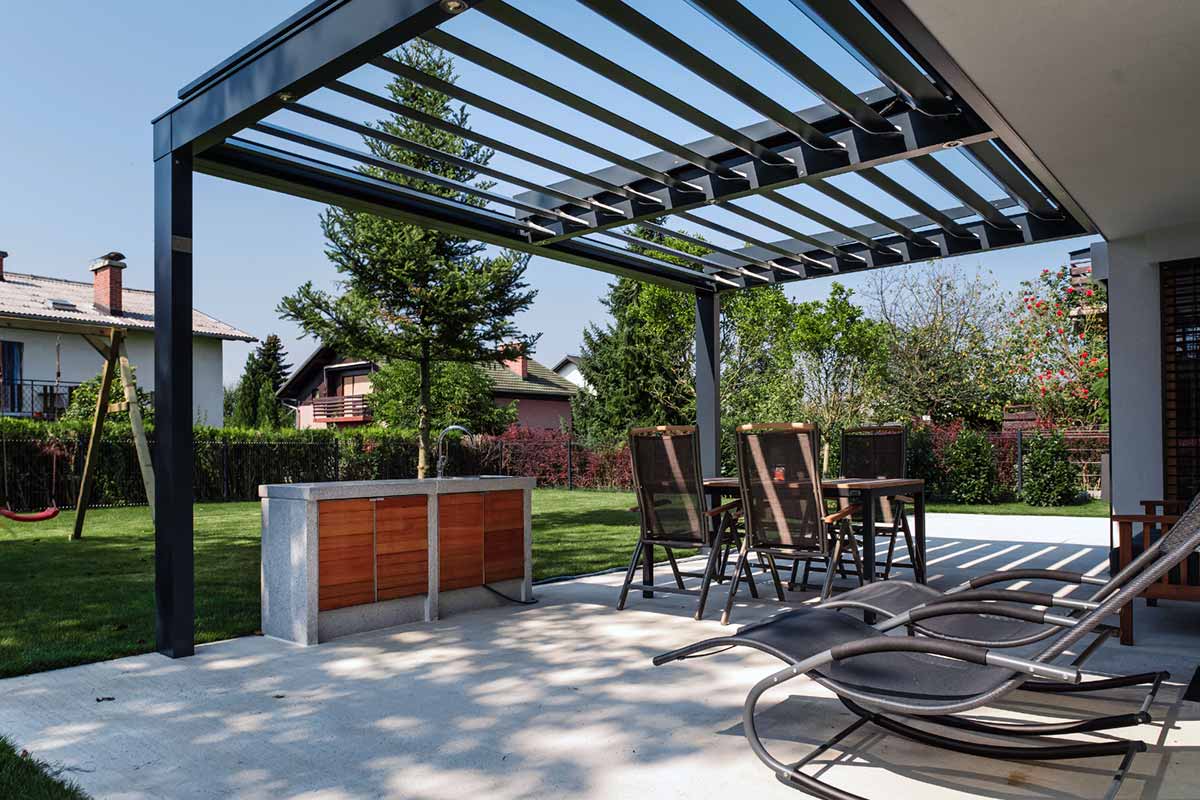
The strength and upkeep requirements of pergola materials determine their lifespan. Common pergola materials include wood, vinyl, steel, and aluminum. The construction industry uses a metal pergola as the most common choice because they provide structural strength and require minimal maintenance.
Common Pergola Materials Compared
Wood is traditional. It has a natural appearance but requires constant maintenance, including sealing, painting, moisture protection, and insect protection. Vinyl is low-maintenance but structurally weak and limited in design use. Steel is strong but heavy and requires corrosion protection. Aluminum is lightweight, corrosion-resistant, and stable in outdoor conditions.
Advantages of Metal Pergolas
Metal pergolas are designed for long-term outdoor use. They maintain structural stability under load and do not deform with temperature changes. Aluminum does not rust and requires minimal maintenance.
Key advantages:
- High structural stability.
- Long service life.
- Minimal maintenance.
- Corrosion resistance (aluminum).
- Suitable for permanent outdoor installation.
Metal pergolas reduce repair frequency and long-term upkeep costs. They also support larger spans without intermediate supports, increasing usable covered space.
Design and Aesthetic Appeal
Metal pergolas support modern architecture. Aluminum frames use clean lines and simple geometric forms. The powder coating process enables manufacturers to achieve uniform surface finishes and a range of colors.
Wood offers classic visual appeal, but it requires ongoing maintenance to retain its original appearance. Metal retains its original appearance over time, requiring no paint updates or physical modifications. Metal pergolas also support integrated lighting and retractable roof systems.
Weather Resistance
Weather resistance is critical. Pergolas must withstand snow, rain, wind, and temperature fluctuations.
Aluminum resists moisture and corrosion. Steel is strong but requires a protective coating. Wood absorbs moisture and degrades more quickly during seasonal weather changes.
Metal structures maintain stability in freeze-thaw conditions and heavy precipitation. This makes them suitable for northern climates where harsh seasonal conditions.
Cost vs Long-Term Value
Wood requires less initial investment, but its upkeep expenses exceed those of other materials. Steel and aluminum require higher upfront investment, but their long-term costs are lower.
The durability of metal pergolas, combined with their lower maintenance requirements, creates greater long-term value than other options. Aluminum provides the best balance of cost, lightweight properties, and long service life.
Metal systems remain more economical than wood throughout their lifespans because wood incurs higher repair and replacement costs in extreme weather conditions.
Installation and Structural Efficiency
Metal pergolas are easier to install due to prefabricated components and precise manufacturing. Aluminum systems reduce installation time and reduce installation errors. They also integrate well with decks, concrete bases, and modern patio systems without major structural reinforcement.
Metal pergolas perform better than traditional materials because they last longer, require less upkeep and installation, and withstand all weather conditions. The outdoor structures made from aluminum and steel materials exhibit long-term durability and maintain consistent operational performance under extreme environmental conditions. They are a practical long-term solution for modern outdoor construction, as it requires less maintenance while providing better value over time.