New to Canada?
If you’re new to Canada, don’t miss our Newcomers to Canada: The Ultimate Guide. It covers everything you need to know about settling in Canada, including housing, employment, healthcare, banking, education, government benefits, and much more.
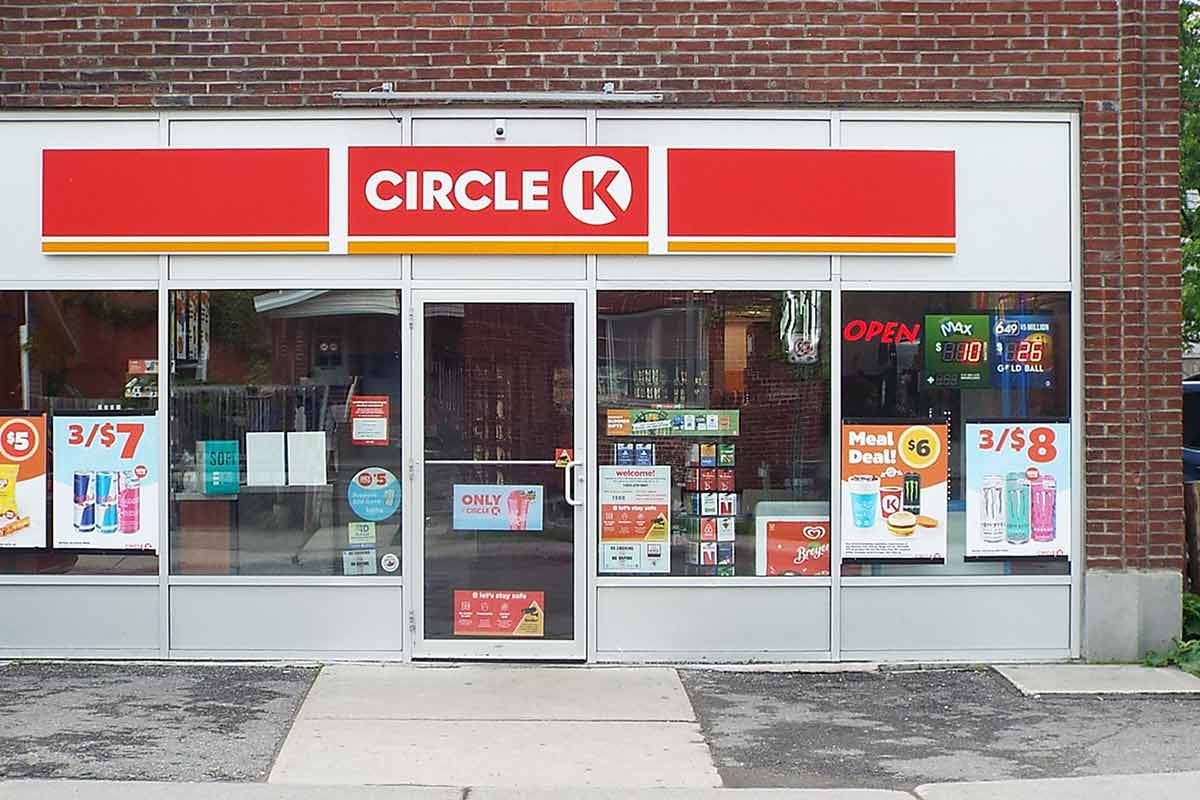
Across Canada’s cities, suburbs, and highways, Circle K has become one of the most recognizable retail brands in the country — a place where Canadians grab their morning coffee, fuel up before a road trip, pick up late-night essentials, or rely on for quick, no-nonsense shopping. While convenience retail often flies under the radar in business conversations dominated by grocery giants, telecom firms, and big-box chains, Circle K quietly operates one of the most strategically significant networks in the Canadian retail landscape.
In 2026, Circle K stands at #3 among the Top 100 Canadian Brands, maintaining the same position it held in 2025. The brand continues to benefit from its nationwide convenience store network, fuel operations, strong customer loyalty, and ongoing investments in digital services and EV infrastructure.
But more importantly, Circle K’s Canadian operations offer a fascinating case study in how convenience retail is evolving. The brand sits at the intersection of changing consumer behaviour, shifting mobility patterns, urbanization, and the long-term transition away from fossil fuels. Its ability to adapt will play a major role in shaping not just its own future, but the landscape of convenience retail in Canada as a whole.
This article breaks down Circle K’s business model, competitive position, brand pillars, and long-term risks and opportunities — with a particular eye on the Canadian market. The goal is simple: to help Canadian readers understand what makes this brand so powerful, how it has achieved its top-ranking status, and what strategic moves will determine where it goes next.
Company Overview
Circle K is part of Alimentation Couche-Tard, a Quebec-based global convenience and fuel powerhouse operating in more than 25 countries. While the parent company’s headquarters remain proudly Canadian, Circle K’s retail model has become a global standard — emphasizing consistent branding, efficient store operations, and category management excellence.
In 2026, Circle K remains one of Canada’s most recognized retail brands. The company maintained its impressive #3 ranking among Canada’s Top 100 Brands, reflecting the strength of its convenience-focused business model and nationwide presence.
Key facts (Canada-focused):
- Category: Convenience retail (C-store), fuel, quick-grab foodservice
- Ownership: Alimentation Couche-Tard (Laval, QC)
- Brand position: Modern, fast, consistent convenience store for everyday needs
- Store count: One of the largest c-store networks in Canada (specific numbers vary by region but thousands under Couche-Tard/Circle K banners)
- Core offer: Fuel, snacks, beverages, coffee, tobacco, lottery, prepared food, essentials, car wash, private label
- Loyalty ecosystem: Circle K app + “Froster”/coffee promotions + fuel rewards pilots
While many Canadians grew up with Mac’s, Becker’s, Couche-Tard, Kangaroo Express, or other regional banners, Circle K has gradually replaced them with a unified identity. The rebranding effort — spanning years — is one of retail’s most successful brand consolidations, creating instant recognition for Canadian drivers and commuters. This consistency is no small win; convenience retail thrives on familiarity, trust, and habit.

What Circle K Is Known For
Circle K succeeds by mastering the core elements of convenience retail while refining them with operational discipline. Its value proposition is built on:
1. Proximity & accessibility: Stores located where Canadians already are — highways, suburban hubs, corner lots, gas stations, and downtown streets. The goal is always the same: be the easiest place to stop.
2. Speed & efficiency: Canadians choose Circle K because they know exactly what they’ll get: fast in-and-out service, minimal friction, consistent merchandising, and efficient store layouts.
3. Everyday essentials: Fuel + coffee + snacks + grab-and-go + household basics = a high-frequency model that keeps traffic stable, even in economic downturns.
4. Private label products: Circle K branded snacks, beverages, and prepared food offerings have grown rapidly, offering higher margins and stronger brand loyalty.
5. Affordable indulgences: Yes — the Froster. The iconic frozen drink still anchors Circle K’s fun, youthful side, contributing to brand personality.
6. Digital convenience: The mobile app, rewards promotions, and fuel discounts signal Circle K’s attempt to build a loyalty ecosystem similar to what grocers and QSRs have already done successfully.Circle K’s formula works because it is uncomplicated, consistent, and predictable — and in convenience retail, those qualities are invaluable.
Strategic Business Model Analysis
Circle K’s dominance is built on six core strategic pillars. Understanding these pillars helps explain why the brand performs so well in Canada.
Pillar 1: High-Frequency Retail Economics
Convenience retail is built on high-frequency, small-ticket purchases. The economics rely on:
- Steady daily foot traffic
- High margins on beverages and snacks
- Volume sales in tobacco and lottery
- Fuel interactions that create store traffic
- Impulse-based merchandising near checkout
Circle K has mastered this model by:
- Standardizing store layouts
- Training staff for speed
- Investing in SKU rationalization
- Using data to optimize product categories across regions
The brand’s real strength is not in selling any single product — it’s in achieving thousands of small, profitable transactions per day across a massive network.
Pillar 2: Fuel + Convenience Synergy
In Canada, many Circle K stores are integrated with major fuel brands. This creates:
- Guaranteed traffic flow
- Additional revenue streams
- Opportunities for cross-promotions
- Captive consumers during refuelling
The synergy is powerful: drivers stopping “just for fuel” often end up buying coffee, snacks, or essentials. This simple behavioural truth is a major part of Circle K’s success.
Pillar 3: Digital & Loyalty Evolution
Canada’s retail environment is increasingly shaped by loyalty ecosystems.
Think:
- PC Optimum
- Scene+
- Canadian Tire Triangle
- Starbucks Rewards
Circle K is pushing toward the same model. Its loyalty strategy focuses on:
- App-based fuel rewards
- Coffee and beverage perks
- Snack and private label promotions
- Exclusive member-only coupons
While Circle K’s loyalty ecosystem is not as entrenched as Canada’s grocery or QSR programs, it is expanding — and strategically, it’s one of the company’s biggest opportunities for long-term customer retention.
Pillar 4: Private Label Development
If grocery chains succeed by turning President’s Choice and Great Value into household names, convenience retail succeeds by elevating its own private label offerings.
Circle K’s private label portfolio includes:
- Chips
- Candy
- Bottled drinks
- Bakery items
- Prepared hot food
- Coffee & beverage products
These items often deliver significantly higher margins than branded CPG goods. For a high-frequency retailer, that margin expansion scales quickly.
Pillar 5: Operational Standardization Across Regions
Circle K’s Canadian stores follow a global playbook:
- Predictable layouts
- Clean storefronts
- Clear signage
- Cashier training
- Inventory control
- Operational KPIs
This is why Circle K “feels the same” whether you are in Ontario, Quebec, Nova Scotia, or British Columbia. From a branding standpoint, this consistency is gold.
Pillar 6: Mergers, Acquisitions & Brand Consolidation
Circle K’s parent company has long been a global acquirer of convenience banners. In Canada, it has absorbed:
- Mac’s
- Becker’s
- Couche-Tard
- Daisy Mart (in some regions)
- Other regional independents
The rebranding strategy took nearly a decade but paid off: Canadians now interact with a unified, national convenience identity.
See Where Circle K Ranks in Canada’s Top 50 Brands
Curious how Circle K compares to other major convenience and retail brands? Check out its placement in the “Top 50 Most Valuable Canadian Brands” list. Read it here.
Market Position & Competitive Landscape
Circle K is one of the top convenience chains in the country, competing in a category that includes:
Competitors
- 7-Eleven
- Shell convenience stores
- Husky/Esso branded convenience
- Independent convenience stores
- On the Run (Petro-Canada)
- Walmart convenience kiosks (limited)
Convenience retail in Canada is not dominated by a single player — but Circle K’s combination of fuel partnerships, large store counts, and operational consistency gives it one of the strongest balance-of-power positions.
Competitive Advantages
- petitive edge comes from:
- Scale economics
- Brand recognition
- Supplier negotiation leverage
- A growing private label portfolio
- A loyalty ecosystem that keeps improving
- A presence in every major province
Circle K has effectively positioned itself as Canada’s “default” convenience store — a strategic advantage that is hard to replicate. Circle K’s ability to maintain its #3 position among Canada’s Top 100 Brands in both 2025 and 2026 demonstrates the resilience of its convenience retail model and the continued relevance of its products and services to Canadian consumers.
Customer Behaviour Trends Affecting Circle K
Several shifts in Canadian consumer behaviour have strengthened Circle K’s position:
1. Demand for frictionless shopping: Busy schedules = shorter, more focused shopping trips.
2. Growth of on-the-go consumption: Whether it’s coffee, snacks, or “grab-and-go” food, convenience stores excel in this category.
3. Fuel-linked retail habits: Despite EV growth, most Canadian vehicles still run on gasoline, making fuel stations high-traffic retail hubs.
4. Desire for proximity retail: The pandemic reshaped shopping patterns; Canadians now value nearby quick-stop options even more.
5. Increased focus on value: Circle K’s competitive pricing and promotions appeal to inflation-conscious consumers.
6. Rising digital adoption: Mobile coupons, app promos, and contactless payments help drive loyalty.
As long as Circle K keeps modernizing, these trends work in its favour.
Challenges: What Could Slow Circle K Down?
Despite its strengths, Circle K faces several looming challenges — some structural, some consumer-driven.
Challenge 1: Long-term decline of fossil fuel demand
EV adoption is slowly increasing.
This threatens:
- Fuel-based foot traffic
- Profit margins tied to fuel partnerships
- Traditional gas-station-based store formats
Circle K must pivot before the shift becomes mainstream.
Challenge 2: Competition from grocery + QSR expansion
Grocery stores offering smaller, quick-stop formats — and QSR chains expanding drive-thru convenience — create overlapping competition.
Challenge 3: Online delivery apps
SkipTheDishes, Uber Eats, and Instacart now deliver convenience items.
This disrupts traditional c-store trip missions.
Challenge 4: Price-sensitive consumers
Dollarama, Walmart, and value grocers chip away at the “affordable quick buy” category.
Challenge 5: Labour availability & costs
The cost of operating long-hour retail locations is rising.
Challenge 6: Regulatory pressures
Restrictions on tobacco and nicotine products can reduce a major revenue source.
Circle K must innovate aggressively to offset these headwinds.
Opportunities for Growth: 2025–2030
Despite the challenges, Circle K has significant avenues for long-term growth in Canada.
1. EV Charging Network Expansion
The biggest strategic shift will be Circle K’s transition from fuel stations to mobility hubs.
This includes:
- Fast EV chargers
- In-store waiting experiences
- Premium grab-and-go food
- Integrated app payments
Circle K is already expanding EV charging in several markets — and Canada is a natural frontier for this shift.
2. Strengthening the Loyalty Ecosystem
There is huge upside if Circle K develops a loyalty program with the depth of:
- PC Optimum
- Scene+
- Triangle Rewards
A robust points ecosystem could significantly increase repeat visits.
3. Expanding Private Label Food & Beverage
Canadians increasingly embrace private-label value.
Circle K can expand:
- Bakery
- Coffee
- Ready-to-eat meals
- Snacks
- Frozen treats
- Beverage lines
This improves:
- Margins
- Customer loyalty
- Brand identity
4. App-based ordering & pickup
Mobile ordering for convenience items is still early in Canada.
Circle K could become the category leader.
5. Urban micro-format stores
Smaller downtown stores built for:
- commuters
- office workers
- condo residents
This is a growing opportunity in major cities.
6. Delivery partnerships
Circle K can strengthen relationships with:
- Uber Eats
- DoorDash
- Instacart
This helps capture digital convenience demand.
Long-Term Outlook for Circle K
Circle K’s position in Canada is strong, but the next five years will define the company’s future more than its past. Three major themes will shape its trajectory:
1. The Energy Transition: Moving from gasoline to mixed-energy mobility will reshape the core fuel-convenience model. Circle K’s early EV strategies will determine its competitive edge.
2. Digital Loyalty Dominance: The brands that win the next decade will be those with powerful loyalty ecosystems. Circle K must either scale its own or partner strategically.
3. Foodservice Innovation: Convenience stores globally are moving into premium grab-and-go foods.
If Circle K elevates its offering, it can compete directly with QSR chains.
The company’s operational discipline gives it a strong foundation. Circle K maintained its #3 ranking among Canada’s Top 100 Brands in 2026, and continued investments in EV charging, digital loyalty, foodservice innovation, and convenience technology position the brand well for long-term growth into the 2030s.
FAQs About Circle K
We heard you, which is why Allreview.ca has compiled and answered most, if not all, of the frequently asked questions so that you don’t have to do the research yourself.
Conclusion
Circle K’s #3 ranking on the Top 100 Canadian Brands lists in both 2025 and 2026 is no accident. The brand has built a national presence rooted in:
- consistent store formats
- convenient locations
- predictable service
- strong operational execution
- digital evolution
- strategic integration with fuel retail
- growing private label presence
For Canadian consumers, Circle K is more than just a convenience store — it’s part of the rhythm of everyday life. Whether it’s morning coffees in Montreal, road trips across the Prairies, or late-night essentials in downtown Toronto, Circle K has become a reliable staple in the Canadian retail landscape.
Looking forward, its biggest challenge — and opportunity — lies in redefining convenience for a new energy era. If Circle K successfully transitions from traditional fuel to digital-first, customer-centric mobility retail, its brand leadership will only grow stronger.
For investors, industry analysts, and Canadian readers, Circle K represents a fascinating blend of old-school convenience and forward-looking strategy — a brand worth watching closely as the convenience economy continues to evolve.
Statistics and Information Sources:
- Wikipedia – https://en.wikipedia.org/wiki/Circle_K
- Brandirectory – https://brandirectory.com/reports/canada